


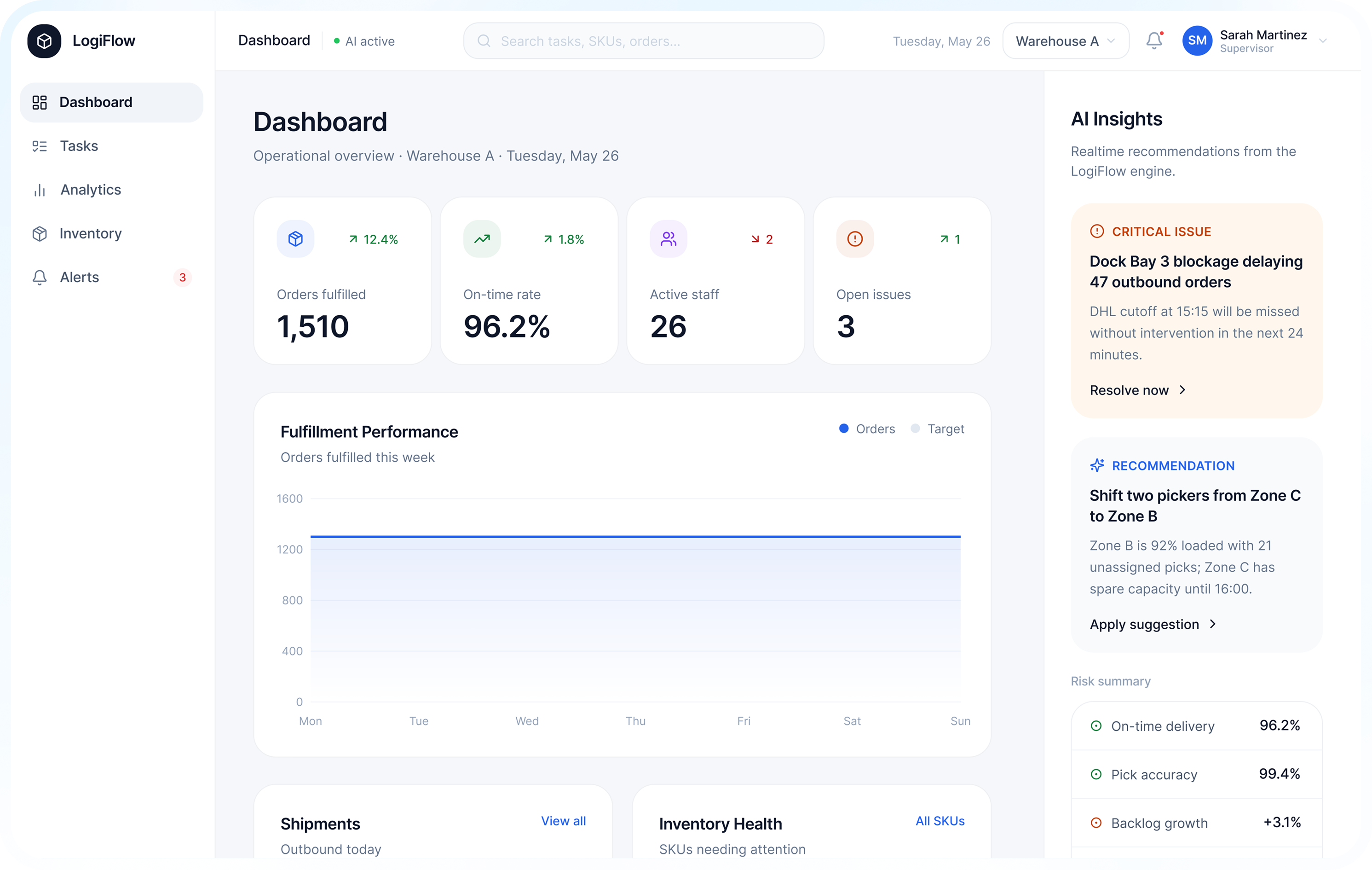
AI Warehouse Agent for Smart Automation
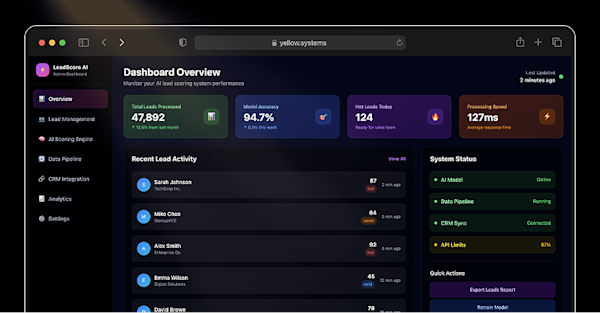
Created an AI warehouse agent that coordinates inventory, prioritizes fulfillment tasks, and predicts bottlenecks, resulting in 35% fewer manual coordination tasks.

About the project
A logistics company operating several regional fulfillment centers approached our team to update their warehouse coordination and reduce bottlenecks during peak demand periods. Their existing warehouse processes relied heavily on manual decision-making and constant communication between supervisors, pickers, and inventory teams. The company wanted us to make a smart solution that would help warehouse teams coordinate tasks and respond faster to operational disruptions.
The client had
Several warehouse locations
More than 300 warehouse employees working in shifts
Over 25 active e-commerce brands in fulfillment
Seasonal traffic spikes reaching 40% above average order volume
We were responsible for
AI solution architecture and consulting
Conversational AI design for warehouse interactions
Development of autonomous workflow orchestration logic
Integration with the client’s WMS, ERP, and inventory systems

Team
Here is the team that worked on the project:

Why agentic AI?
Traditional warehouse automation tools typically rely on predefined rules and static workflows. However, the client’s operations changed constantly throughout the day due to urgent shipments, inventory shortages, staffing fluctuations, and delivery delays.
A rule-based system would require continuous manual adjustments and still struggle to adapt fast enough.
Instead of simply executing commands, the AI warehouse agent could reason through operational scenarios and recommend or trigger the next best action.
Why agentic AI?
Traditional warehouse automation tools typically rely on predefined rules and static workflows. However, the client’s operations changed constantly throughout the day due to urgent shipments, inventory shortages, staffing fluctuations, and delivery delays.
A rule-based system would require continuous manual adjustments and still struggle to adapt fast enough.
Instead of simply executing commands, the AI warehouse agent could reason through operational scenarios and recommend or trigger the next best action.
Project timeline

Discovery and planning
1 week

Architecture & AI workflow design
1 week

Development & integrations
9 weeks

Testing & rollout
6 weeks
Development process
Discovery & analysis
We conducted workshops with warehouse managers and operational staff to find communication bottlenecks and repetitive coordination tasks. The main focus areas includ
Order prioritization
Inventory issue handling
Internal warehouse communication
Peak-load operational response
Architecture design
We designed a multi-agent orchestration system capable of:
Monitoring inventory events in real time
Detecting fulfillment bottlenecks
Communicating with staff through conversational interfaces
Triggering escalation workflows automatically
Development & integration
The AI warehouse agent was integrated with:
Warehouse Management System (WMS)
ERP platform
Shipment tracking tools
Inventory databases
Internal reporting systems
Testing & rollout
We conducted functional, AI model, workflow, performance, integration, data, safety, user role, reliability, and simulation testing.
Functional testing
AI model accuracy testing
Workflow and automation testing
Performance testing
Key features delivered
The final solution consists of several key features.
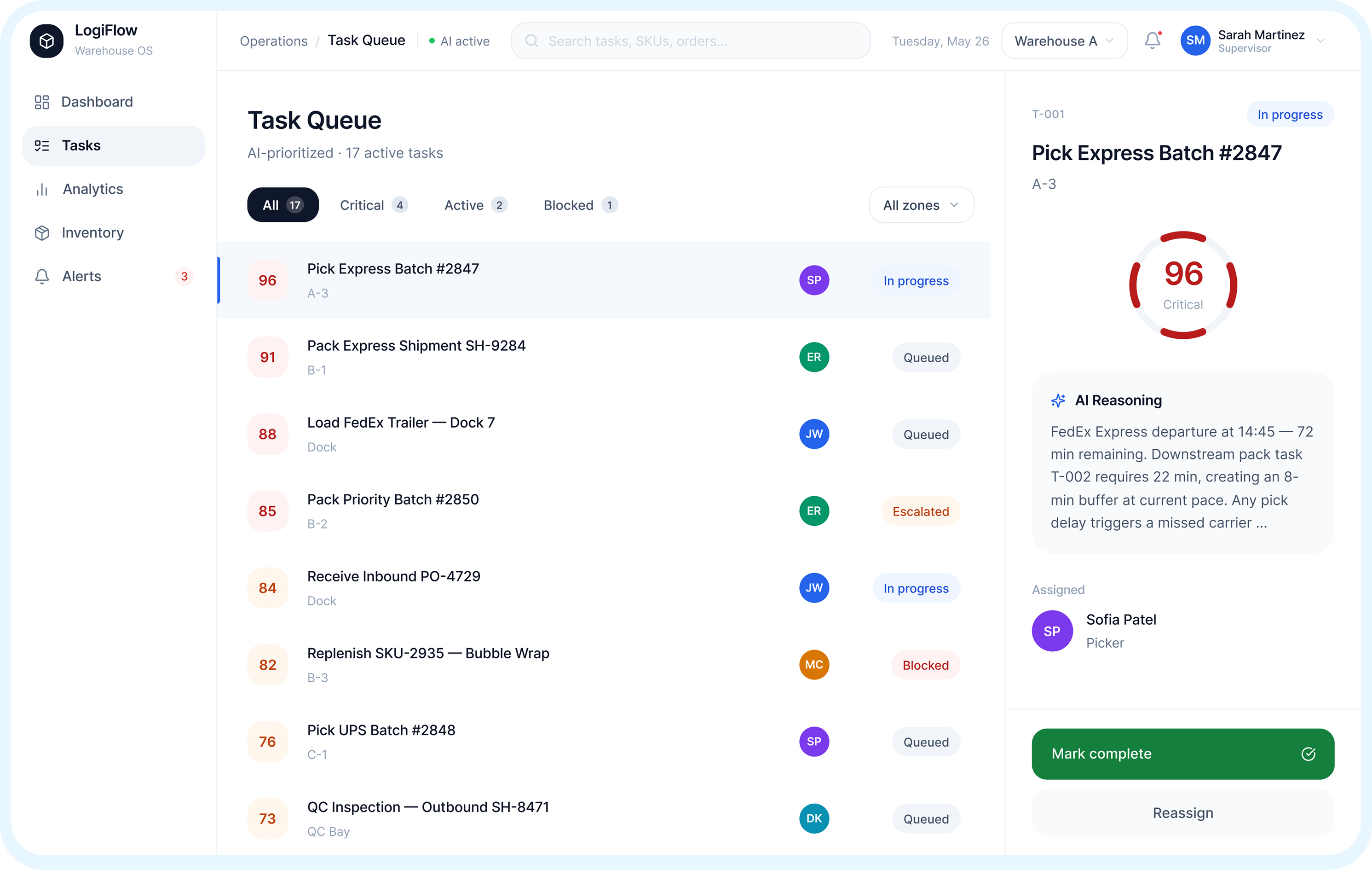
Autonomous task prioritization
Instead of relying on static workflow rules, the system continuously analyzed incoming order volume, shipment deadlines, inventory availability, and carrier pickup schedules to automatically reprioritize tasks across the warehouse floor.

Conversational AI assistant
We developed a conversational interface that allowed warehouse employees and supervisors to interact with the system through natural language using handheld devices and warehouse terminals.

Intelligent escalation management
The AI warehouse agent introduced automated escalation logic that could detect blocked fulfillment workflows, identify delayed outbound shipments, recognize repeated picking failures, and escalate operational bottlenecks to the correct teams automatically.

Predictive bottleneck alerts
Using historical warehouse data and real-time operational signals, the AI system generated predictive alerts for likely bottlenecks before they affected fulfillment performance.


Tech stack
The toolset we used to create the solution.
Development challenges and solutions
How our team dealt with a range of development challenges.

Constantly changing operational priorities
Challenge: Warehouse operations changed rapidly throughout the day due to things like oncoming order spikes or carrier delays. Traditional automation workflows struggled to adapt to these conditions because they relied heavily on predefined rules.
Solution: We implemented an event-driven orchestration architecture that continuously reevaluated operational priorities based on live warehouse data.

Preventing alert fatigue
Challenge: During early testing, the AI system generated too many operational notifications, which risked overwhelming supervisors.
Solution: We introduced alert severity scoring and priority-based notification filtering. This ensured critical operational issues received immediate attention.
Result
35%
Reduction in manual coordination tasks

Operational visibility improved across all warehouse locations in real time

Average issue escalation time decreased from 18 minutes to under 6 minutes
28%
Faster order processing during peak demand periods
monthly cost.