


Healthcare AI Virtual Assistant for Chronic Care Patients
How our client got 27% less administrative workload for nurses and staff and higher patient satisfaction scores with a brand-new AI-powered patient engagement platform.

About the project
A mid-sized healthcare provider managing long-term care programs for patients with chronic conditions, including diabetes and hypertension. The provider serves thousands of active patients and operates a web and mobile patient portal integrated with an existing EHR system. The client faced significant engagement problems. Patients ignored care plans after initial onboarding, nurses spent excessive time answering repetitive, non-clinical questions, and appointment adherence was inconsistent. The existing portal lacked proactiveness, so the provider partnered with us to build a more dynamic AI-powered experience.
The client had
The existing patient portal (web & mobile)
The EHR system
We were responsible for
Integrating AI into the existing solution
Providing safety guardrails

Team
Here is the team that worked on the project:

Why AI (and Why Now)
Chronic care requires continuous, personalized engagement, not one-off interactions. The client needed:
24/7 patient interaction
Read morePersonalized communication
Read moreEarly risks detection
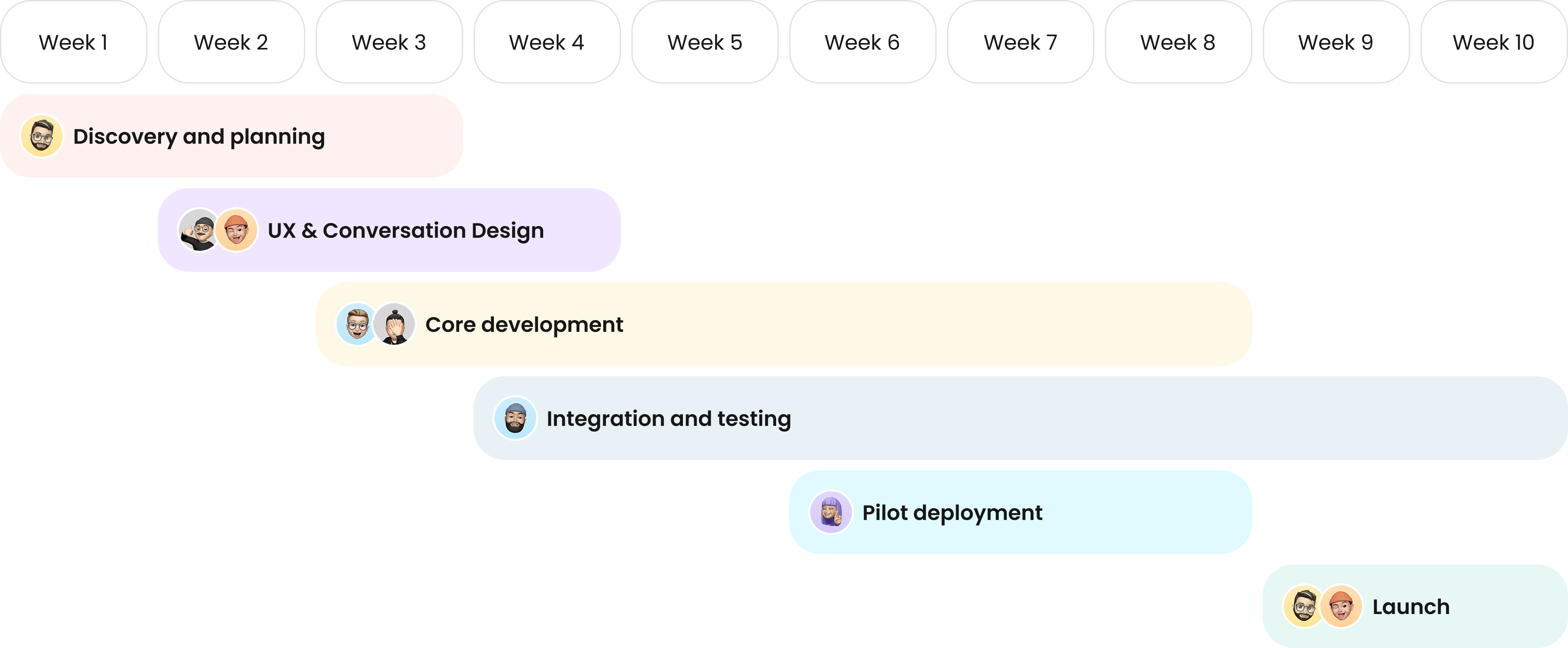
Read moreProject timeline
AI assistant key features
AI virtual health assistant

Tech stack
The toolset we used to create the solution.

Development challenges and solutions
How our team dealt with a range of development challenges.
Ensuring medical safety and regulatory compliance
Challenge: The virtual assistant needed to support patients without providing medical diagnoses, treatment recommendations, or clinical interpretations. Any AI-generated response that crossed this boundary could create regulatory risk and, more importantly, undermine patient safety.
Solution: We implemented strict conversational guardrails that combined system-level prompts, rule-based logic, and predefined response templates. Requests involving medical judgment were automatically escalated to clinical staff or redirected to other support channels.

Preventing notification fatigue and over-engagement
Challenge: Frequent reminders/check-ins could overwhelm patients and lead to disengagement rather than consistent replies.
Solution: An engagement scoring model was introduced to adjust message frequency and timing dynamically. Patients who consistently responded received fewer reminders, while disengaged patients were approached with alternative communication strategies or temporary silent periods.

Balancing automation with tutor control
Challenge: Delivering personalized engagement required access to sensitive patient data, so the risk of privacy concerns and compliance violations becomes higher.
Solution: We followed a privacy-by-design approach, which limits data access to only what was necessary for engagement scenarios. All data was encrypted, access was role-based, and patient-specific information was never used for model training or retained beyond retention periods.

Scaling without increasing the team workload
Challenge: The client needed to support a growing chronic care population without adding operational burden to nurses and care managers.
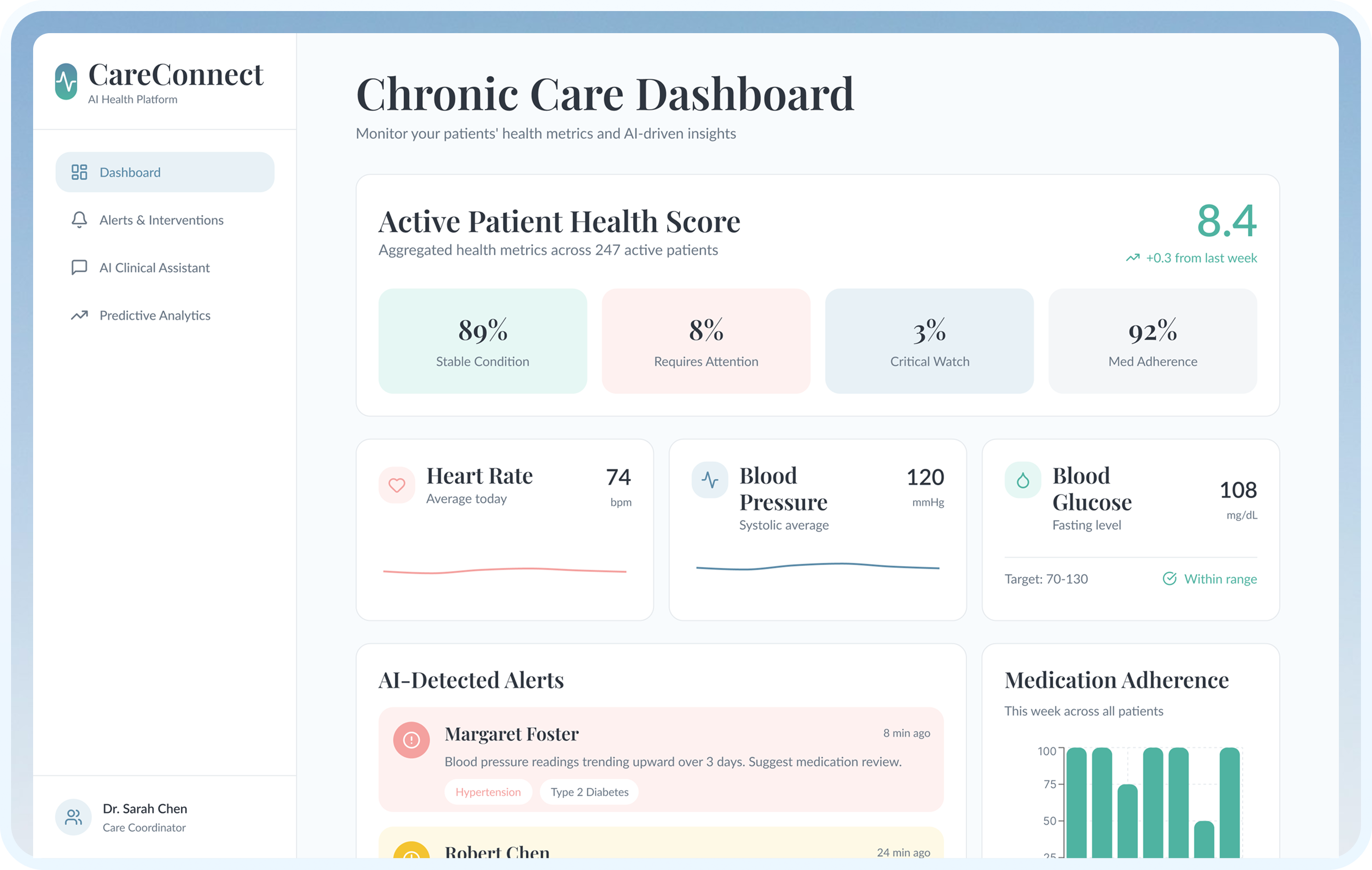
Solution: We designed the assistant to resolve high-volume, low-complexity interactions autonomously, while escalating only high-risk or low-confidence cases. A care team dashboard provided clear visibility into where human intervention was truly needed.

Result
6 months post-launch
+38% increase in patient portal engagement
–27% reduction in nurse administrative workload
+22% improvement in medication adherence
Higher patient satisfaction scores in chronic care programs

monthly cost.